
Give me your bike.
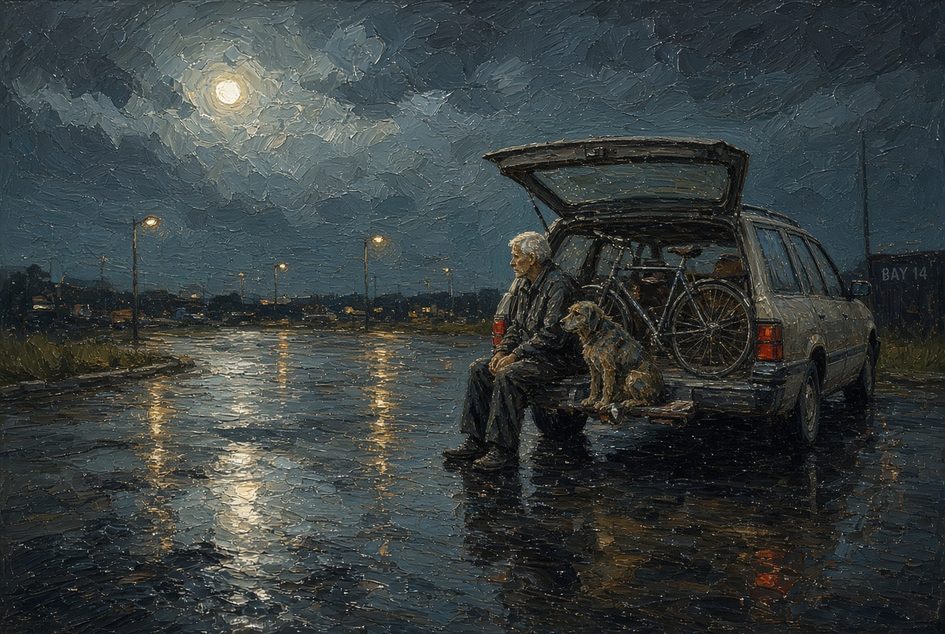
This was 2 a.m. in a carpark in Bunbury. John, 79, left his car’s rear door open so his dog could get out. Now a large, ice-affected man in his mid-forties had his head in the door, and despite the dog going mental, he said again.
Give me your bike.
“I should have just given it to him,” John said. “But it’s my bike. I use it. I often ride forty to fifty kms a day.”
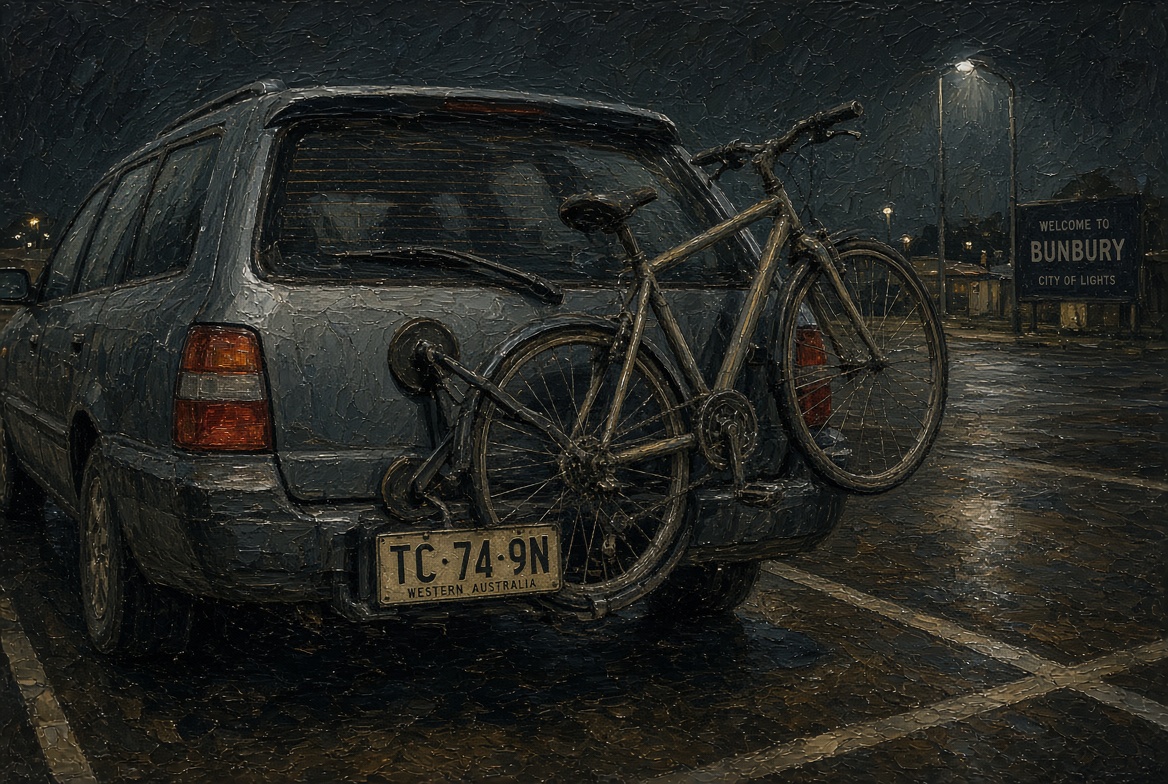
The bike was firmly attached to the rear of his station wagon in a complicated suction-cup rack of some kind. It looked odd yet strong.
In the end, John said, the man started running at the rear of the car and kicking the bike. Three times he did that.
“Did you drive off?” I asked.
“I couldn’t. I was in my sleeping bag.”
John used to be a poultry farmer, but in 2004 he invested in a new factory. “I was going to produce food products. But everything went wrong and then that was it. I was bankrupt.” He and his dog had basically been living on the road ever since.
The dog was old, and I knew there was no way he could leave it alone for hours while he went cycling.
“He bent the rear wheel, so I had to get that repaired. And that was it.”
John is a stick man waiting for the wrong wind. But he was organised.
This was his son’s car. A station wagon. He’d taken out the rear seats and used marine ply to build a flat floor with compartments underneath to store clothes, food and whatever else he could fit in there. He didn’t own a fridge, or a computer or a TV, and entertained himself by watching blogs on his phone.
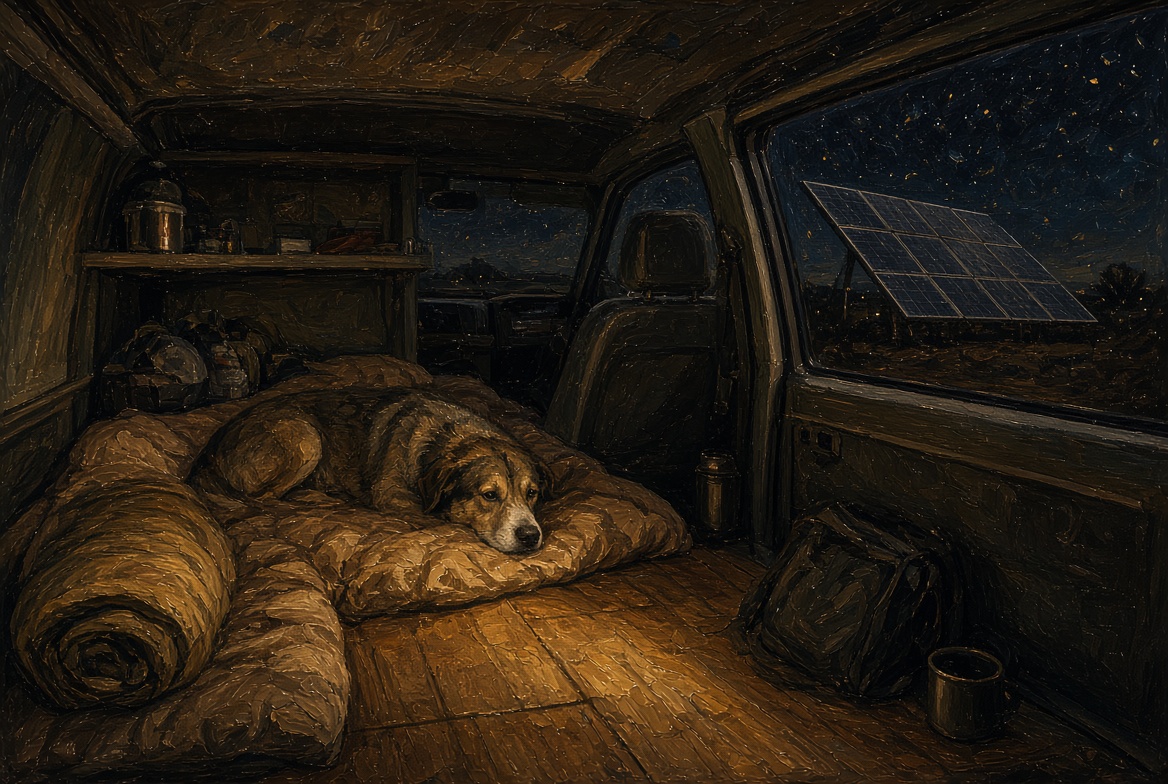
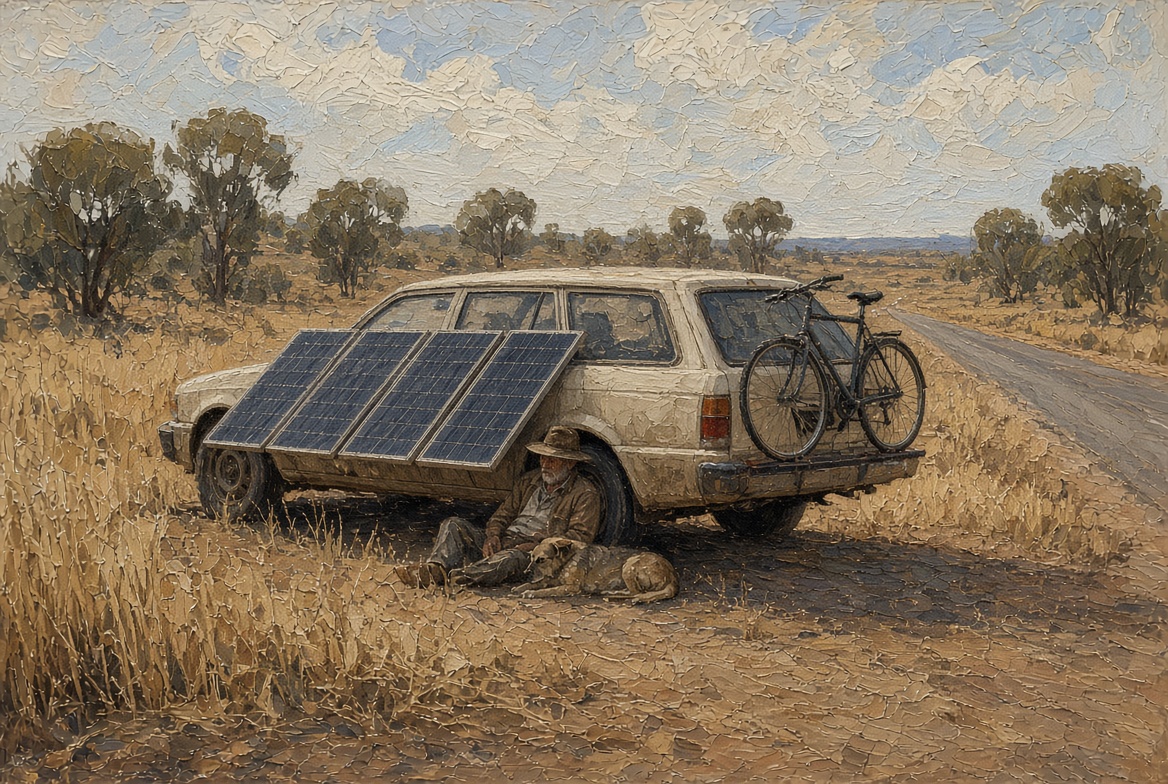
His mattress and sleeping bag rolled up as one and was stored behind the driver’s chair, and four slim transportable solar panels were draped along the sunny side of his car.
“One night the dog woke me and I saw that the front door was open, and I thought, that’s odd, but then I realised there was an Aboriginal man in the front seat and he was rifling through the glove box. And he had a knife.
“I don’t blame them though. I don’t hold any grudges. They must be struggling. Doing what they feel they have to do.”
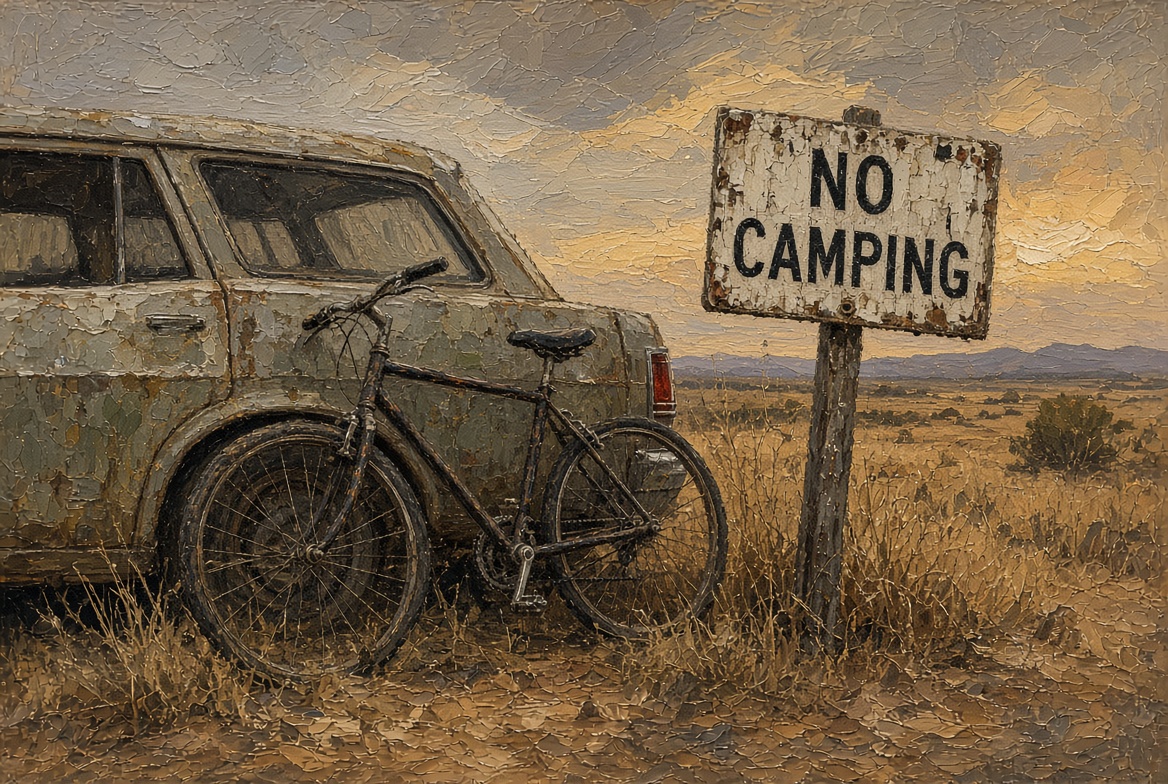
He told me he can’t afford to stay in caravan parks. They are too expensive, and yet every carpark has a no-camping sign.
“You’re a refugee in your own country,” I said.
And his blue eyes, that seemed populated by clouds, altered at this.
“The rangers are ok. If you’re nice to them they let you stay for a day or two.”
“What’s the longest that you usually stay anywhere?” I asked.
He had a think about this, then replied. “Four days.”
I took another look at the rear of his wagon, which was basically empty. “So this is all you have.”
“Yes, but it’s ok. You learn quickly that you don’t need all that stuff.”
“You’ll own nothing and be happy,” I said, then added, “You’re like a poster child for Klaus Schwab.”
He smiled at this, then lost that expression to say, “It’s all orchestrated. You know.”
“It’s all orchestrated,” he said.
“Yeah, I think that too.”
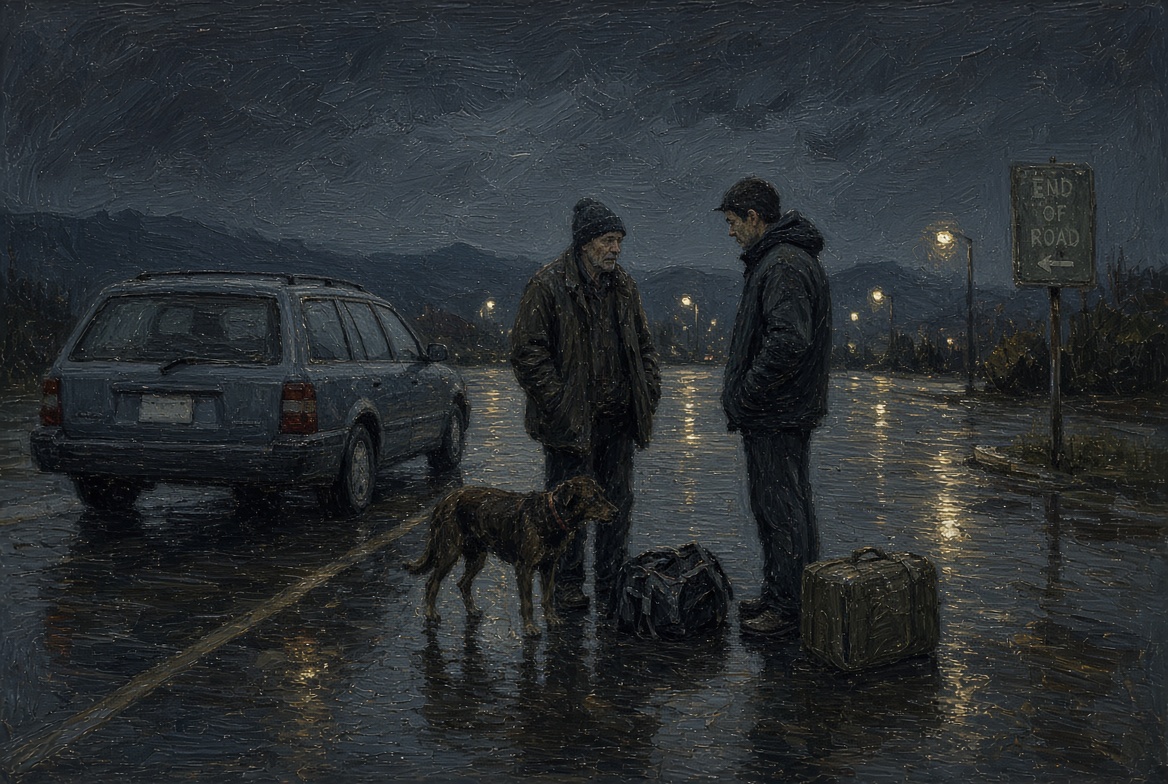
And for a moment, as he patted his bags, we were two spectators chatting at the end of the world.
“Do you have any plans?” I asked.
“No,” he smiled. “I just take things by day. But I did push-ups, you know, and planks.”
Interesting. Kel and I shower in gyms and the people there are trying to get fit, whereas to John, his health at his age was life and death.
And then there was the dog.
To me it was an old canine, but to John, who was doting on it, it was the last holder of his soul’s kite string.
Michael Gray Griffith
Dynamite Bay / Western Australia
October, 2026

Leave a Reply