
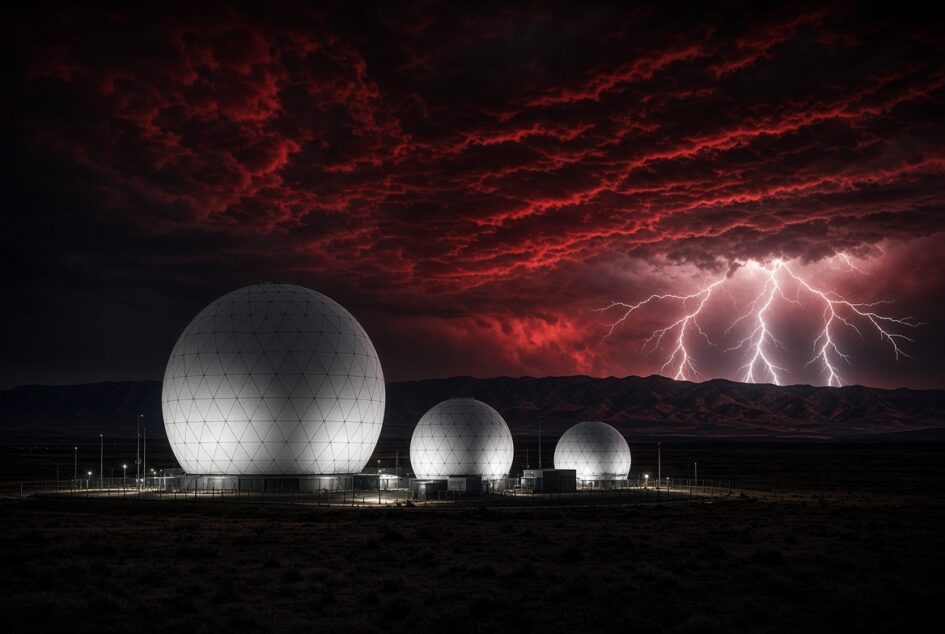
The Australian continent has always been useful to other people’s wars. What has changed is the density of that usefulness.
The Nautilus Institute, an American security think tank with a nuclear disarmament brief funded mainly by American philanthropic foundations, has just published a public database of Australian defence facilities and American access.
The count is stark: the US military controls 17 facilities on the mainland and has access to 75 more Australian-run installations. American defence corporations reach a further 18.
In total, 110 facilities – well over half the installations the researchers could assess with confidence.
Richard Tanter, the database’s author and an honorary professorial fellow at the University of Melbourne, says American access is no longer a matter of penetration. It is saturation. From Beijing’s side of the ledger, he argues, Australia is less a host of US bases than “a US base in its own right.”
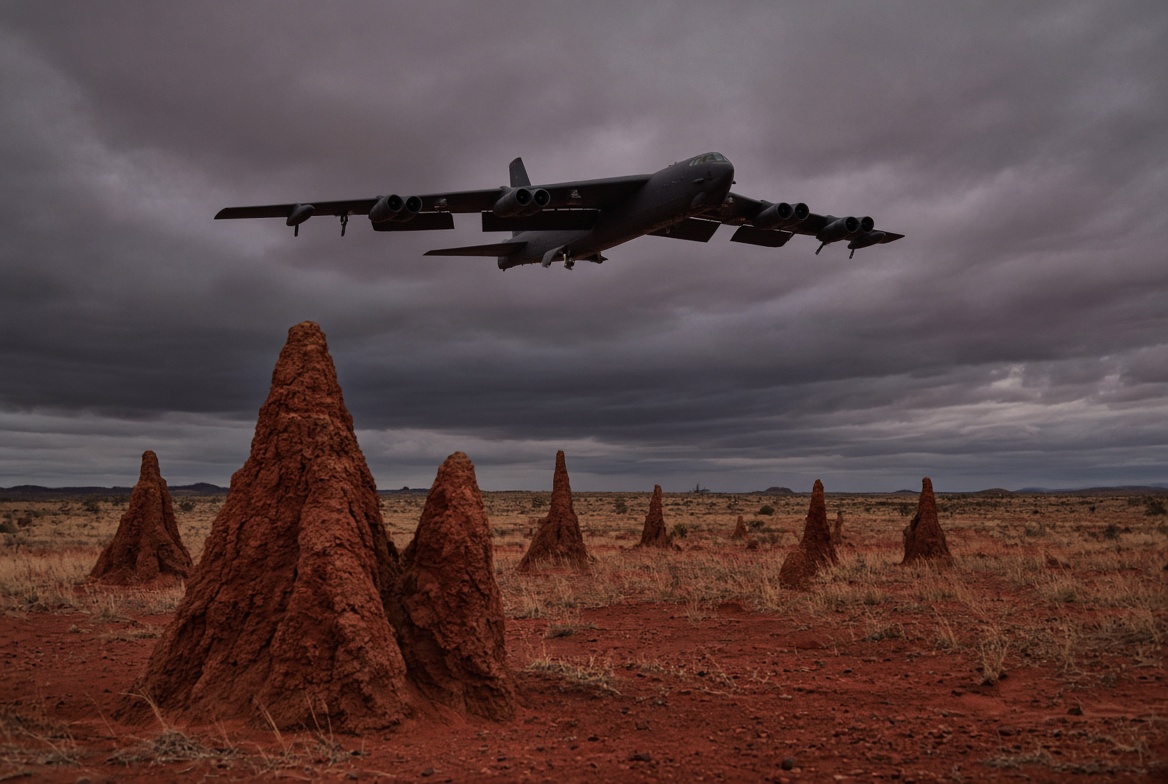
The government says Australia still chooses. On paper, that is true. In practice, the choice is being made smaller every year. When American aircraft, ships, weapons and targeting systems are already here, a crisis in the Taiwan Strait or the South China Sea does not arrive as a clean question for Parliament. It arrives as a fact on the ground.
Pine Gap is already in the American war machine. Darwin already hosts the marines. Tindal is being prepared for American bombers. Stirling is about to take American and British nuclear-powered submarines. None of that was put to a vote. None of it can be switched off on the morning a war starts.
America’s military saturation of Australia is a direct threat to Australian sovereignty – not as an abstract word in a treaty, but as the ordinary right of people in this country to decide what is done in their name, on their land, and with their lives.
A foreign military that can use more than half your defence facilities does not need to occupy you to own the decision to go to war. It only needs you to discover, too late, that the decision has already been made.

The official line has not moved. Defence still holds to a fundamental principle of no foreign bases on sovereign territory, and says the government retains sole control over the deployment of the Australian Defence Force and the use of Australian land.
The 2026 National Defence Strategy repeats that the alliance remains fundamental to generating, sustaining and projecting credible military power. Defence Minister Richard Marles has been plainer still: an increasing American footprint is coming, and it is good for national security, a counterweight to China’s buildup. Last month marked 75 years of ANZUS. Foreign Minister Penny Wong called the treaty a cornerstone.
The story underneath the slogan is older and less tidy. The alliance was written in 1951, after two world wars in which Australian troops had already fought beside Americans. In the 1960s the Cold War put hardware on the ground: the naval communications station at North West Cape in 1963, Pine Gap near Alice Springs in 1966, Nurrungar in 1969.
Legendary Australian journalist Desmond Ball, who repeatedly complained of surveillance by Australian intelligence agencies, titled his 1980 book A Suitable Piece of Real Estate.
Protests and electoral pressure produced a legal tidy-up. Through the 1980s the Fraser and Hawke governments rebadged American sites as joint facilities and adopted a doctrine of “full knowledge and concurrence.” Australia would know what was done in its name.
It would not, in practice. Nurrungar closed; its early-warning work moved to Pine Gap. The station outside Alice Springs remains formally joint and always American-commanded: signals-intelligence satellites, missile-launch warning, interception of foreign satellite communications. Its role in identifying targets for US strikes has never been a matter of public record.
The second phase began in 2011, when Barack Obama and Julia Gillard announced a marine rotation through Darwin. It started small and is now about 2,500 marines in the dry season, training, pre-positioning aircraft, and exercising with the ADF. The 2014 Force Posture Agreement, written “with full respect for Australian sovereignty,” gives US forces and contractors unimpeded access to agreed facilities for deploying people and materiel, bunkering ships and refuelling aircraft.
Since then the network has spread into logistics, munitions, fuel and industry. Lockheed Martin assembles guided missiles at Port Wakefield. Northrop Grumman is building rocket motors at Mulwala. Bandiana, at Wodonga, is being prepared for pre-positioned American weapons, vehicles and fuel. Bradshaw, in the Northern Territory, is a training area the size of Cyprus.
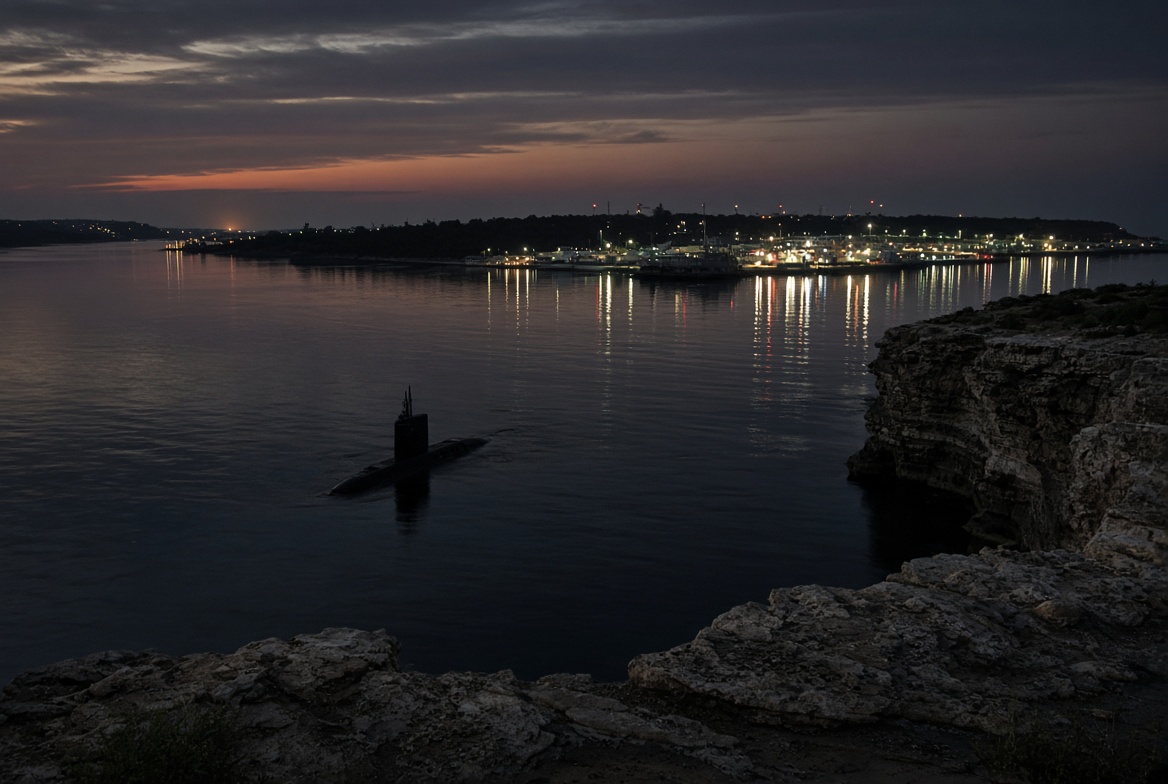
From 2027, up to 1,200 American personnel are expected at HMAS Stirling, off Fremantle, as US and British nuclear-powered submarines begin rotating through Western Australia under the AUKUS agreement, sold to the public as the acquisition of nuclear submarines.
Former defence minister Christopher Pyne has been less delicate: for Washington, AUKUS is also a submarine base in the Indian Ocean.
Analysts warn that this architecture could drag the country unwillingly into war. Albert Palazzo, formerly the army’s director of war studies, says the government is “waltzing its way into a war” by letting the continent become a platform for force against China. Emma Shortis of the Australia Institute argues that integration erodes the option of saying no; involvement becomes the default.
That is also the case made by Australians for War Powers Reform, the only national organisation dedicated to changing how this country goes to war. Its argument is simple and, in a democracy, hard to dismiss: any decision to take Australia into international armed conflict should be made by Parliament, not by the prime minister or the executive alone. Hosting and access, the group says, are themselves a war-powers problem. Parliament never votes on whether these facilities may be used in an American conflict, yet once they are embedded the practical choice narrows to zero.
Without full transparency about Pine Gap and other military bases Australia could easily be dragged into another foreign war before we know it. In fact we may already be involved in existing conflicts via these bases and because of increasing military interoperability with the U.S.
Dr Alison Broinowski AM, AUSTRALIANS FOR WAR POWERs REFORMS
Public opinion is already splitting. A Lowy Institute poll this year found trust in the United States to act responsibly at 31 per cent, the lowest on record, and confidence in Donald Trump at 21 per cent. Support for basing US forces here has fallen to 55 per cent. An Australia Institute poll found 59 per cent preferring a more independent foreign policy to a closer American alliance.
Sovereignty is not a slogan in a treaty. It is the right to decide, and that right is being spent before Australians are asked.
Further Reading
The US now has access to more than half Australia’s military bases. Guardian Australia.
Australians for War Power Reforms
Home
Australian Bases and US Involvement

Leave a Reply