
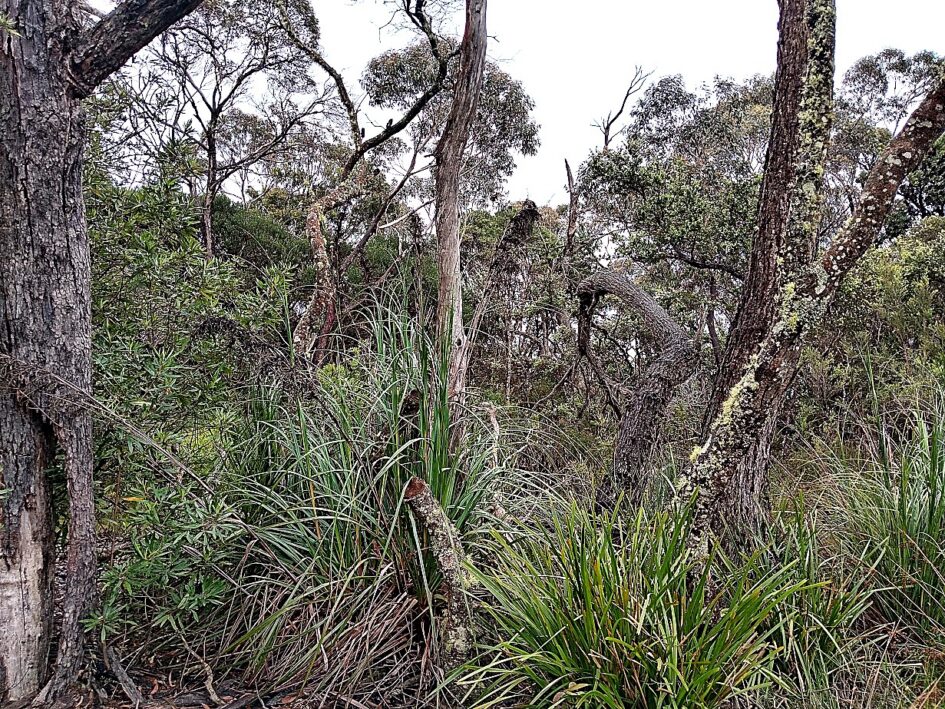
The plateau at Barren Grounds, on the Illawarra escarpment above the south coast of NSW, is the southern remnant of a much larger sheet of Middle Triassic Hawkesbury Sandstone, laid down more than 200 million years ago as the Sydney Basin filled with river and coastal sands. The sandstone is tough and relatively impermeable. Beneath it lie softer Permian shales and coal measures.
Over tens of millions of years the Illawarra Escarpment has retreated eastward as those weaker rocks weathered and were undercut, leaving the resistant sandstone to form the flat-topped plateau and the near-vertical cliffs that ring it. On the plateau itself the low relief and poor drainage keep water close to the surface, creating the shallow, acid soils and hanging swamps that support the heath. Small basalt outcrops mark later volcanic activity, but the dominant character of the place is still the old sandstone surface, slowly shedding its edges while holding a thin, wet skin of vegetation on top.

In late October the heath is not a single wash of colour. It is a succession of small, precise events. Fine, needle-leaved shrubs carry tight yellow button heads and dark, rounded buds. Other shrubs hold clusters of small white flowers, five-petalled, faintly pink at the centres, set against long, narrow leaves.
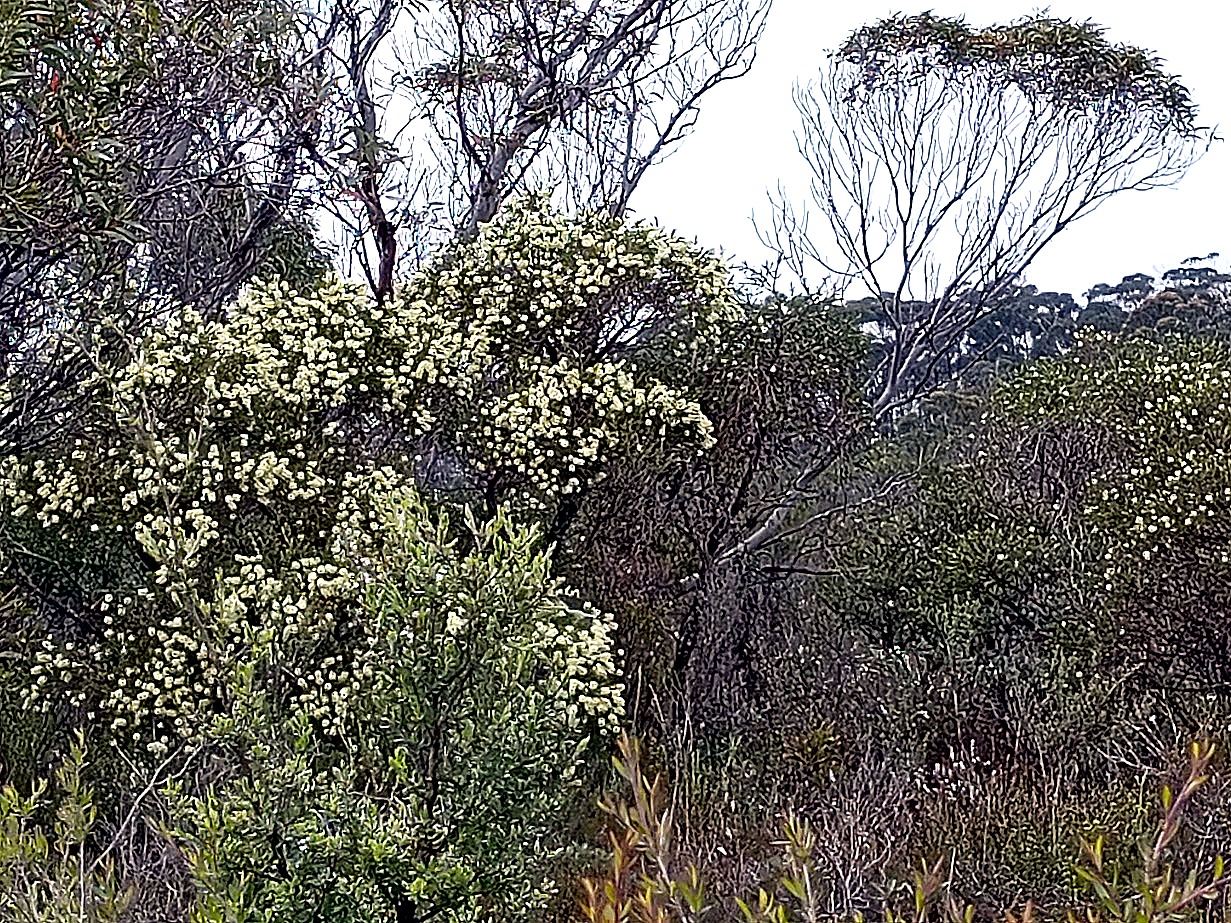
Yellow blooms appear in low clusters on grey-green foliage. Between them the sedges stand in dense tussocks, and the trunks of the open woodland are mottled with lichen. Nothing is loud. The colour is there if you stop and look at the scale the plants themselves use.

This is one of only four large areas of heath remaining on the New South Wales south coast. The plateau is a hanging swamp system: shallow, wet soils over sandstone, almost completely enclosed by cliffs that drop to warmer forest and cleared land below. The reserve was gazetted in 1956, the third faunal reserve in the state, primarily to protect two birds that depend on this kind of country, the eastern ground parrot and the eastern bristlebird. Both are still present, though neither is easy to see. Around 180 bird species have been recorded. The flowering shrubs feed honeyeaters; the dense low growth shelters the more secretive species.

The plants that dominate the heath are the ones adapted to the poor, acid, often waterlogged soils. Banksias flower later, in winter. In spring the show is carried by the smaller shrubs: species of Baeckea and related tea-trees, Isopogon (the drumsticks), Epacris, various peas, and the white-flowering shrubs whose precise identity is less important, on the day, than the fact that they are open and fragrant enough to draw insects. The understorey is full of sedges—Gahnia and others—that form the dense green base you walk through. In better-drained pockets there is open eucalypt woodland; in wetter hollows the sedgeland thickens. The whole pattern is a response to slight changes in drainage and soil depth across a few metres.

Tim Entwisle, the botanist, has argued that the European four-season calendar is a poor fit for south-eastern Australia. He proposed five seasons keyed to what the plants actually do. In his system, August and September are “sprinter”—the early flowering, especially of wattles. October and November are “sprummer,” the main spring flush. That is roughly where the plateau sits now. The wattles have largely finished. The heath shrubs are in their turn. The distinction is not academic. Once you start watching the sequence, early wattles, then the button flowers and the white clusters, then the later banksias and Christmas bells, the year stops feeling like a blunt four-part division and starts to look like a series of overlapping, plant-led events.

The D’harawal people of this country have long worked with six seasons, read from the flowering and fruiting of particular plants and from the behaviour of animals. The European calendar is simply the least precise of the systems available.

Walking the tracks, the peculiar beauty of the place is in the restraint and the detail. The light is bright but not harsh. The wind keeps the shrubs moving. A close view of the needle foliage shows how densely the leaves are packed, how the yellow heads sit just above the green. The lichen on the trunks is pale green and grey, almost luminous against the dark bark. The sedges catch the light along their edges.
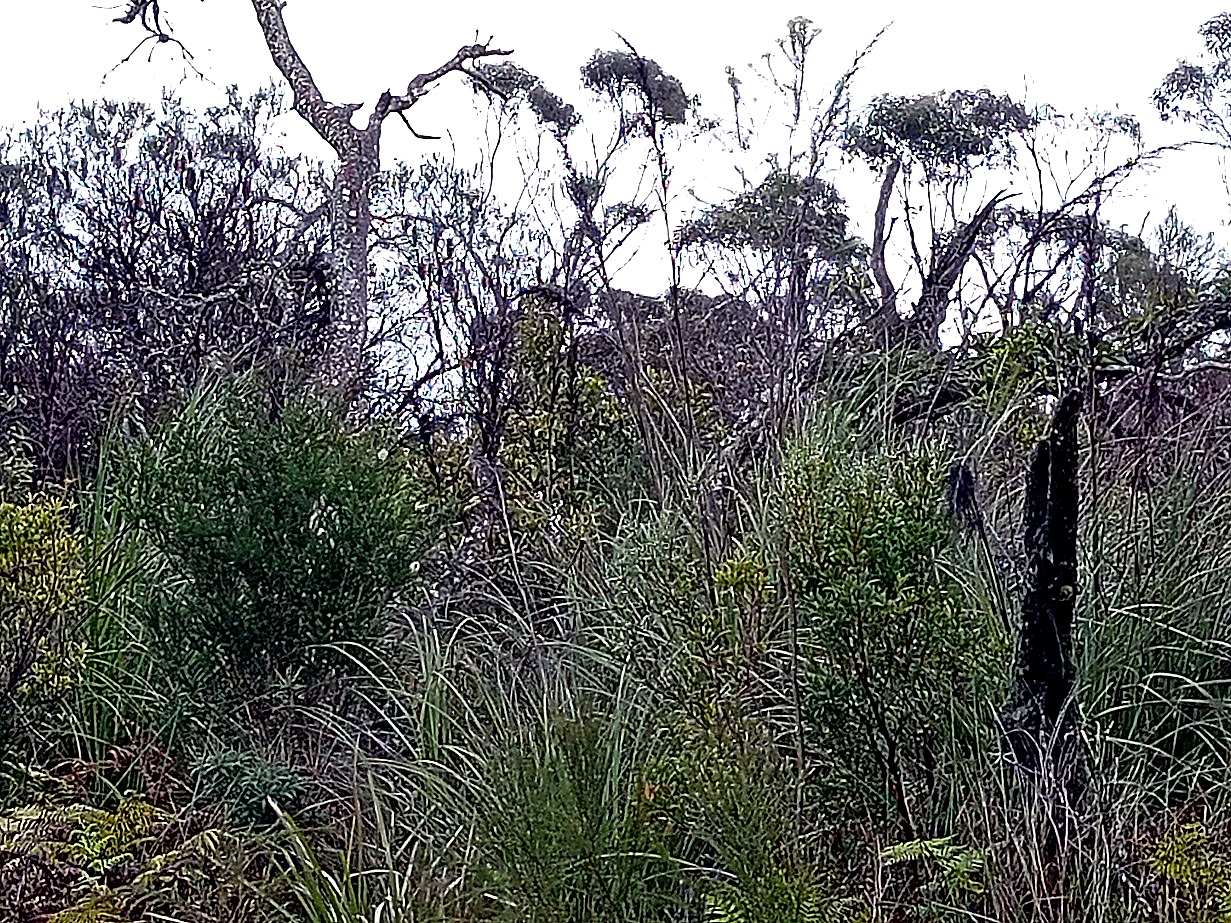
From the lookouts the coast is visible on a clear day, but the stronger impression is of the plateau itself: a high, open, carefully made landscape that has been left largely alone.

It is easy to miss. From the road the reserve can look like ordinary bush. Once you are on the tracks the difference is clear, the fine texture of the heath, the way the vegetation changes with the smallest shift in moisture, the birds that use the cover and the flowers. The place does not need a dramatic seasonal peak to justify a visit. What it offers, in this stretch of the year, is the steady, particular flowering of a heath that has survived because the soils and the climate and the cliffs have kept most other uses away. In a world beset with troubles, that is enough.
Photography by John Stapleton.

