
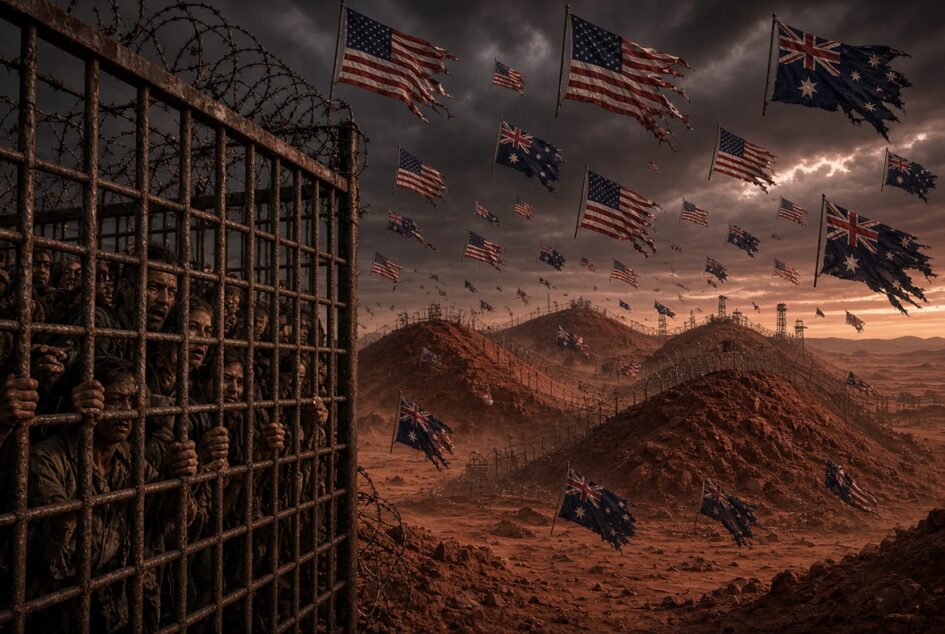
For most Australians, the eSafety Commissioner exists as a name attached to content that disappears, accounts that get restricted, and the vague sense that “they” are trying to control what can be said online.
“They’re trying to censor us,” is a refrain heard up and down the social echelons, from the park bench to the cocktail party.
The “they” has a face: Julie Inman Grant.
As the controversial Digital Duty of Care legislation moves through Parliament, handing her office still broader powers, the question of who she is and what she has built becomes harder to ignore. Perhaps only in Australia would a WEF aligned long term associate of Bill Gates with close ties to the American government individual be given what is essentially the role of Chief Censor, but the ability to shape the public narrative.
Julie Inman Grant has led the world’s first dedicated government online safety regulator since January 2017. Appointed by the Turnbull government (the role itself created in 2015 under the Enhancing Online Safety for Children Act), she was reappointed in 2022. Her second term ends around 17 January 2027; she has publicly said she will not seek a third and is “exhausted.” In recent Senate estimates she reflected on nearly a decade in the role.

Our concern is that if ANY country is allowed to censor content for ALL countries, which is what the Australian ‘eSafety Commissar’ is demanding, then what is to stop any country from controlling the entire Internet?
ELON MUSK
Background and ties
American-born (Seattle), dual US-Australian citizen. Degrees in international relations (Boston University) and international communication (American University); Certified Information Privacy Professional. Early career included US Congress work (aide to Republican Congressman John Miller) and a declined CIA approach.
Julie Inman Grant spent roughly 17 years at Microsoft in corporate affairs and government relations roles, ultimately as Global Director for Safety & Privacy Policy and Outreach.
Anecdotes from that period include direct exposure to Bill Gates-era Microsoft (she has recounted episodes involving him at the White House and National Press Club). She later set up Twitter’s public policy, safety and philanthropy work across Australia/New Zealand/Southeast Asia (circa 2014–2016) and held an APAC government relations role at Adobe before taking the commissioner post.
WEF connections are public and official: she is a member of the World Economic Forum’s Global Coalition for Digital Safety, was named one of the #Agile50 (world’s most influential government innovators) by WEF and Apolitical in 2020, and has participated in WEF-related digital safety work. Julie Inman Grant co-founded and chaired the Global Online Safety Regulators Network, sits on the WePROTECT Global Alliance board, and holds other international roles. Critics see these as evidence of transnational regulatory alignment; supporters frame them as practical cooperation against online harms.

Julie Inman Grant has become a law unto herself and is wielding the immense power of her office, with no meaningful democratic oversight, in order to silence online debate and opinion with which she disagrees.
John Storey, Institute of Public Affairs
Those international links have continued. In late September 2025 Inman Grant delivered the keynote at a non-public roundtable hosted by Stanford University’s Cyber Policy Center. The gathering, which also included officials from the European Union and Brazil, was framed as a discussion of compliance and enforcement of online safety rules.
US House Judiciary Chairman Jim Jordan later described it as an effort to facilitate cooperation on global content removal and pointed to the university’s earlier involvement, through the Stanford Internet Observatory, in channelling government-related requests to platforms.
No transcript of her remarks has been released. Inman Grant has said the session she attended involved no discussion of compliance coordination or regulatory information-sharing. The same pattern of limited transparency has appeared in parliamentary scrutiny of her travel.
At Senate Estimates in February 2024, Senator Malcolm Roberts questioned her attendance at the World Economic Forum’s Davos meeting, where she appeared in her official capacity. She told the committee she had “achieved more in four days than I could in four years” through direct meetings with senior technology executives. The taxpayer cost of that trip was later confirmed at just under $41,000; a second Davos visit the previous year brought the combined bill to roughly $52,000. Roberts pressed her on both the justification and the substance of the engagements.

The eSafety Commissioner is using her extraordinary powers to police political speech and silence dissenting voices.
SENATOR ALEX ANTIC
Key legislation Julia Inman Grant has administered or shaped
- Enhancing Online Safety for Children Act 2015: Created the original children’s eSafety Commissioner role and early cyberbullying powers.
- Online Safety Act 2021 (commenced 23 January 2022): The core statute. It expanded the office dramatically:
- Adult Cyber Abuse Scheme (world-first complaints pathway for severe abuse targeting Australian adults; high “serious harm” + intent threshold; 24-hour removal notices).
- Expanded Cyberbullying Scheme (beyond social media).
- Image-Based Abuse Scheme (non-consensual intimate images).
- Online Content Scheme (illegal/restricted Class 1/2 material, including child sexual abuse material and certain violent content; powers over platforms, hosts, search engines, app stores).
- Basic Online Safety Expectations (BOSE) and industry codes/standards (co-regulatory regime for detecting/removing unlawful and age-restricted material; eSafety can register codes or impose standards).
- Stronger information-gathering powers, ISP blocking for abhorrent violent conduct, higher civil penalties.
- Online Safety Amendment (Social Media Minimum Age) Act 2024: In force 10 December 2025. Requires age-restricted platforms (eSafety has designated YouTube, X, Facebook, Instagram, TikTok, Snapchat, Reddit, Twitch, Threads, Kick and others) to take “reasonable steps” to prevent under-16s holding accounts. No penalties on children/parents; platform fines can reach tens of millions (later strengthened). eSafety monitors compliance, has investigated several platforms, and reported millions of accounts restricted. High Court challenges (including by Reddit) are ongoing as of November 2026.
- Strengthening Enforcement for the Social Media Minimum Age amendments (2026): Expanded eSafety information-gathering and raised penalties.
- Online Safety Amendment (Digital Duty of Care) Bill 2026: Passed the House of Representatives on 28 October 2026 (with government and crossbench amendments). Now before the Senate (committee report due around 20 November 2026). It imposes a broad statutory “digital duty of care” on online service providers (risk assessments, proactive mitigation of “seriously harmful” material and conduct, child protections including simulated emotional intimacy features). It expands eSafety powers (including ability to use “sock puppet” identities in investigations, stronger enforcement, higher penalties—up to ~A$109 million for corporate breaches in some cases), shifts away from parts of the existing co-regulatory codes/BOSE model after a transition, and includes age-assurance elements. Critics describe it as further centralising control; the government frames it as systemic accountability.
Related but separate: the Communications Legislation Amendment (Combatting Misinformation and Disinformation) Bill was pursued then abandoned after Senate opposition.
These instruments give eSafety formal powers to investigate complaints, issue removal or remedial notices, compel information, register/enforce industry codes and standards, and pursue civil penalties. Informal “complaint alerts” have also been used when formal thresholds were not met.

We are seeing a government-appointed official deciding what Australians are allowed to see and say online. That is not safety. That is censorship.
Senator Gerard Rennick
Notable legal cases and outcomes
- Wakeley church stabbing footage (April 2024): eSafety issued Class 1 removal notices to X and others over graphic footage of the attack on Bishop Mar Mari Emmanuel. X geo-blocked in Australia but refused a global takedown. eSafety sought a Federal Court injunction for worldwide removal. Justice Geoffrey Kennett limited the scope (global ban not “reasonable”). eSafety discontinued the Federal Court action in June 2024 and pursued Administrative Appeals Tribunal/Administrative Review Tribunal proceedings. Elon Musk publicly labelled her a “censorship commissar”; she reported doxing and harassment of herself and family.
- Billboard Chris (Chris Elston) post (2024–2025): Removal notice over a post criticising transgender activist Teddy Cook’s proposed WHO role. Administrative Review Tribunal set the notice aside in 2025 (did not meet adult cyber-abuse threshold of intent to cause serious harm). Taxpayer legal costs for eSafety reported around $66,000. X and Elston treated it as a free-speech win.
- Celine Baumgarten “queer club” post (2024–2026): Video critical of a primary-school queer club led to an informal complaint alert that resulted in geo-blocking on X. Full Federal Court (February 2026) dismissed eSafety’s appeal, confirming the tribunal had jurisdiction to review the informal complaint alert and that the office could not evade review by characterising the action as merely informal. Complainant’s side estimated high taxpayer costs. Opposition called for review of eSafety’s notice practices.
- Transparency notices and child sexual abuse material reporting: Multiple notices under the Online Safety Act. Courts have upheld certain obligations on platforms (including X); related appeals and compliance disputes have produced mixed results and cost orders.
- X challenge to Relevant Electronic Services Standard: Federal Court (2026) ruled X, as a social media service, is not subject to that particular industry standard.
These cases illustrate both the reach of the powers and their limits when challenged on statutory interpretation, reasonableness, and intent thresholds. eSafety has also used codes/standards and transparency reporting extensively.

Australia’s eSafety Commissioner is trying to impose a global censorship regime on American companies and American citizens. We will not allow it.
US CONGRESSMAN JIM JORDON
Context for the “park bench” view
Australians see successive governments expanding online rules, takedowns for severe abuse and illegal content, age limits for social media, industry codes, and now a broad duty of care, while platforms push back and courts occasionally rein in overreach.
The legislation is now extensive. The Online Safety Act 2021 created the modern framework: the Adult Cyber Abuse scheme, image-based abuse rules, Class 1 and Class 2 material classifications, and the power to issue removal notices with 24-hour compliance windows. Industry codes developed under the Act impose Basic Online Safety Expectations on platforms.
The proposed Digital Duty of Care Bill would add proactive risk-assessment and harm-prevention obligations, further expanding the Commissioner’s ability to demand systemic changes rather than merely respond to individual complaints.
Additional measures around social media age restrictions for under-16s have also been placed under her enforcement remit. Each layer has been presented as protecting Australians, particularly children, from online harm. Each has also increased the volume of content that can be ordered removed or geo-blocked, often with limited public explanation of the criteria applied.

“The Administrative Review Tribunal has exposed the eSafety Commissioner’s scheme of sending ‘informal takedown orders’ that can’t be reviewed. This is a tactic they have been using in 99 per cent of their cases to try and avoid accountability for their censorious behaviour.”
— Reuben Kirkham, Free Speech Union of Australia
The practical effect has been a series of high-profile interventions.
The most widely reported involved footage of the 2024 Wakeley church stabbing. Inman Grant ordered X (formerly Twitter) to remove the material globally, not merely within Australia. X geo-blocked the content for Australian users but refused the global takedown. The Commissioner sought a Federal Court injunction; the court ultimately declined to extend it on the terms she sought, and she later dropped the case while pursuing other avenues. Similar disputes have arisen over other content, including material involving gender-critical commentators and political speech that platforms or the office have classified as adult cyber abuse or Class 1 material. In several instances the office has asserted extraterritorial reach, arguing that geo-blocking is insufficient because Australians can use VPNs. Platforms have repeatedly contested both the legality and the practicality of these demands.
Legal challenges have followed. X has been the most frequent litigant, contesting both specific notices and the broader claim that Australian law can compel worldwide removal of content that remains lawful in other jurisdictions. Other cases have tested the boundaries of the Adult Cyber Abuse scheme and the Commissioner’s ability to act on subjective assessments of harm. Critics, including US congressional figures, have argued that these actions amount to a foreign censorship regime capable of chilling speech by American citizens and companies. Inman Grant has maintained that her office does not regulate political speech and acts only on complaints involving material that meets statutory thresholds of harm. Australian free-speech advocates and opposition senators have countered that the thresholds are elastic and the oversight limited.
As the Digital Duty of Care legislation advances and Inman Grant prepares to leave the role she has shaped for nearly a decade, the architecture she leaves behind will remain.

Australians still experiences it mainly as content that vanishes or accounts that are restricted, with little visibility into the decisions that produced those outcomes.
In being shielded from the wild updrafts of the internet, the Australian public are being shielded from the truth. A soup of government messaging as the primary media intake simply breeds distrust.
Prominent free speech advocate Michael Shellenberger sees it like this:“So, when exactly is Julie Inman Grant returning to America?” he asked at CPAC Australia in 2026, the line drawing cheers. He has described her as “the key architect of a multi-governmental network to censor the speech that politicians and government bureaucrats fear,” and argued that her extraterritorial demands (including attempts to force global removal of content) show Australia joining Brazil and others in seeking the power to censor the whole internet.
On the Digital Duty of Care legislation he was blunter: “Shockingly bad. I’ve never seen anything so extreme, so radical. It really allows the government to censor anything it wants. There’s four words: ‘may cause significant harm.’”
He has also zeroed in on the sock-puppet provisions, warning that “the censors at eSafety can run unlimited fake accounts and override social media platforms’ terms of service.
”Shellenberger has further claimed that Inman Grant and like-minded officials “may be working with other governments to create identity requirements and to stamp out Virtual Private Networks,” which he says millions of people in restrictive countries rely on to reach the open internet.
In his view the pattern is clear: a coordinated push for global content control that reaches well beyond Australia’s borders.

