
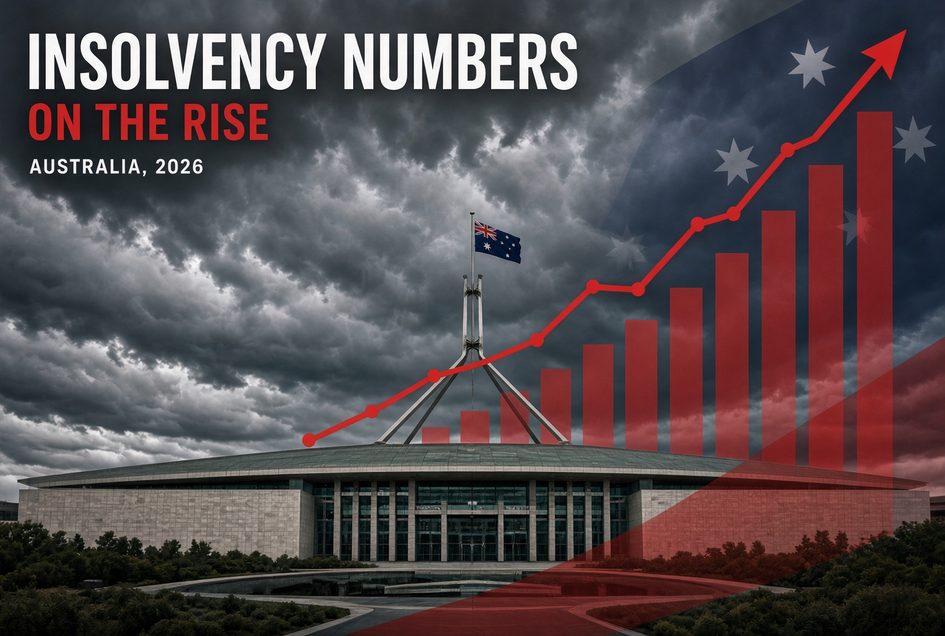
Australian businesses are closing at rates that would have been unthinkable a few years ago, and the human cost is spreading into personal bankruptcies and late payments that signal more pain ahead. Official figures show 14,153 companies entered external administration for the first time in the 2025-26 financial year.
August alone hit a monthly record of 1,808, driven largely by the spectacular collapse of Sydney developer Bathla Group and its hundreds of related entities, which left projects unfinished, workers stood down and creditors facing billions in exposure.
Headlines have framed the broader picture bluntly: tens of thousands of businesses have gone under since Labor took office in 2022, with cumulative claims circulating around the 47,000–50,000 mark.
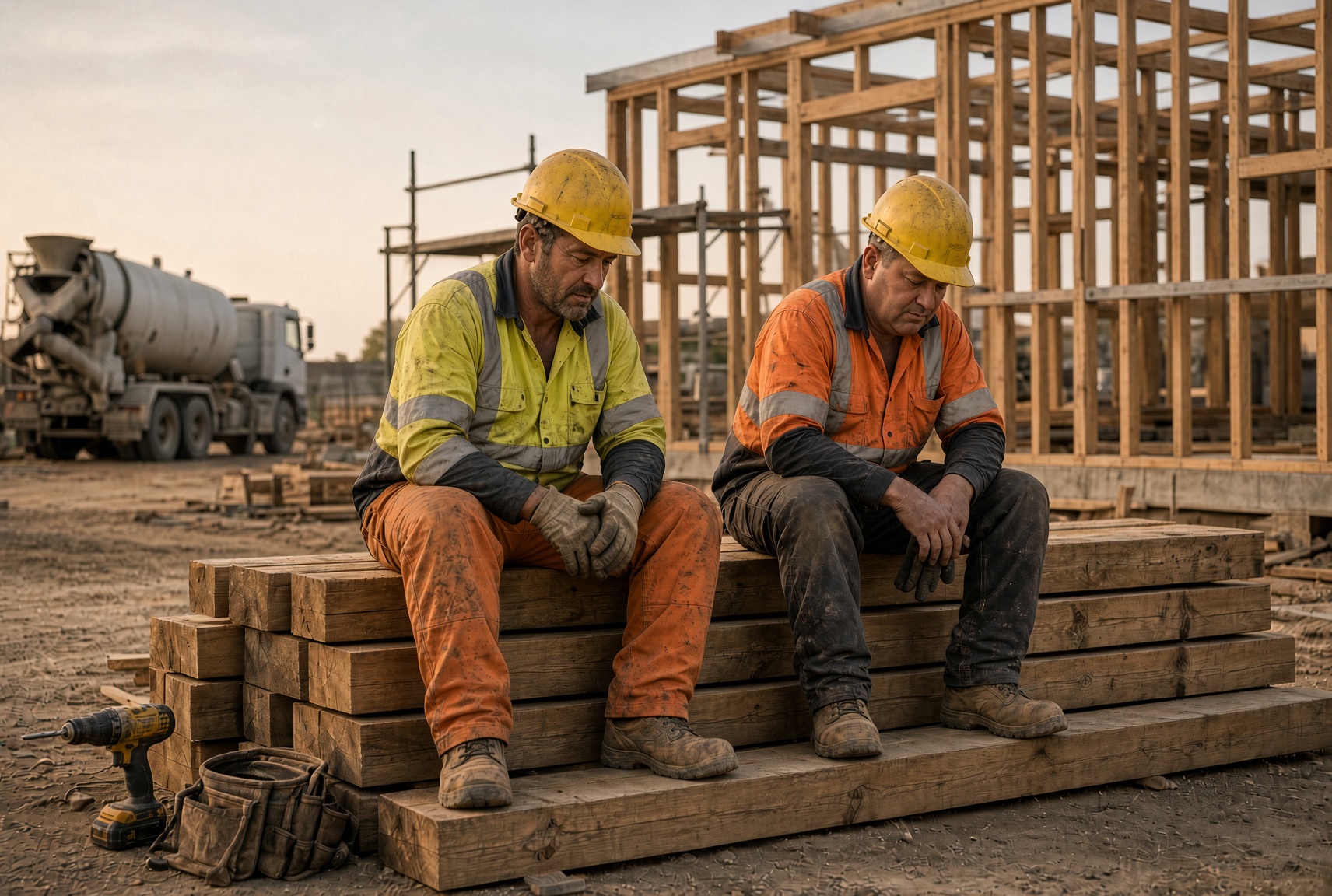
Construction has absorbed the heaviest blows, accounting for roughly a quarter of corporate failures, followed by accommodation and food services and retail. These are the sectors that build homes, feed communities and keep high streets alive.
Hospitality operators and builders locked into fixed-price contracts have been crushed by elevated input costs, fuel prices and interest rates that remain stubbornly high.
Property investor and commentator Scott Kuru has been among the most consistent voices calling the situation what it is. In recent analysis he noted that last financial year alone, almost 40 businesses shut their doors every single day.
“Since Labor came into office in 2022, more than 47,000 Australian businesses have entered insolvency… Business insolvencies are now more than 200 per cent higher than they were just a few years ago, and they’re sitting well above pre-COVID levels.
“Every single one of those businesses was somebody’s dream.
“Somebody poured their life savings into it and took a risk, and now tens of thousands of those businesses are simply gone.”
He has also described the trend as the backbone of the economy breaking, with construction, hospitality, retail and manufacturing taking the hardest hits, and warned that Australia has recorded successive years of net losses among small employing businesses.
“I never understood why people hate the government so much until I started my own business.”
OPERATOR, INDUSTRIAL ROAD, OAK FLATS, NSW
The official corporate numbers already understate the damage. Insolvency practitioners and credit analysts repeatedly point out that many operators simply walk away, deregister quietly or fold informal operations without triggering a formal appointment.
CreditorWatch’s latest Business Risk Index shows the early warning signs are flashing red: one in ten invoices is now at least two months overdue, the highest rate in eight-and-a-half years. The share has doubled in twelve months.
Only 48 per cent of invoices were paid on time in September. Food and beverage businesses are particularly exposed, with nearly one in five invoices seriously late.
Trade payment defaults and ATO tax debts are also climbing. These are classic leading indicators of further insolvencies.
Personal insolvencies are rising in parallel. The Australian Financial Security Authority, the Australian government agency responsible for administering the personal insolvency system, reported 3,596 new personal insolvencies in the June quarter 2026, up 13.1 per cent on the same quarter a year earlier.
Roughly 30 per cent involved business-related debts. Debt agreements and bankruptcies both increased. Many of those entering the system are sole traders, directors and workers from construction and related trades whose livelihoods collapsed with the companies they ran or supplied.
The Albanese government continues to emphasise record numbers of new business registrations and points to the insolvency rate as a share of all companies sitting near longer-run averages once the Bathla spike is set aside.
The government’s framing ignores the post-pandemic catch-up, the sustained pressure from higher minimum wages, energy costs, regulatory burdens and the recent budget’s tax changes that many owners say have further eroded incentives. The rosy image being pushed by an increasingly hated government also ignores the so-called “lived experience”; insolvencies and bankruptcies are not just about paperwork, they’re about the crushing of hopes, dreams and aspirations. They’re about the crushing of people’s lives and livelihoods.
The Reserve Bank has acknowledged elevated stress in hospitality, construction and transport, and notes that insolvency is a lagging indicator.
The full effect of weaker conditions has not yet fully appeared in the data.
For communities that rely on local builders, cafés, retailers and tradespeople, the distinction between “skewed by one big collapse” and a broader deterioration is academic.
Each closed business means lost jobs, unpaid suppliers, unfinished houses and families absorbing the shock through personal insolvency.
The official narrative that life remains rosy sits increasingly at odds with the invoices, the administrators’ reports and the people locking doors for the last time.
Further information

Leave a Reply