Prime Minister Anthony Albanese is rarely far from a beer. Cameras have caught him chugging one in the crowd at a Gang of Youths concert in his home city, pouring at Gage Roads in Fremantle, or turning up at a Downing Street dinner with a four-pack of “Albo’s Pale Ale” from Willie the Boatman, the small Sydney brewery that put his face on the can.
Back in 2025, when ‘Albo’ famously poured beers and shouted the bar at the Old Mates Pub in New York after addressing the United Nations General Assembly, his ‘ordinary bloke’ schtick was working. It’s not working any more.
The image is carefully cultivated: the ordinary bloke from the inner west who still likes a cold one. What those photographs never capture is the industry that once made Australian beer culture distinctive being steadily dismantled on his government’s watch.
One might have expected a Prime Minister who so frequently appears with a beer in hand to notice. Instead the contrast is almost comic. While independent producers fold under indexed excise and market lock-out, Albanese continues the photo opportunities. A four-pack for the British and Canadian prime ministers. A pour at a Western Australian brewery. The everyman performance is polished. The policy response is useless.
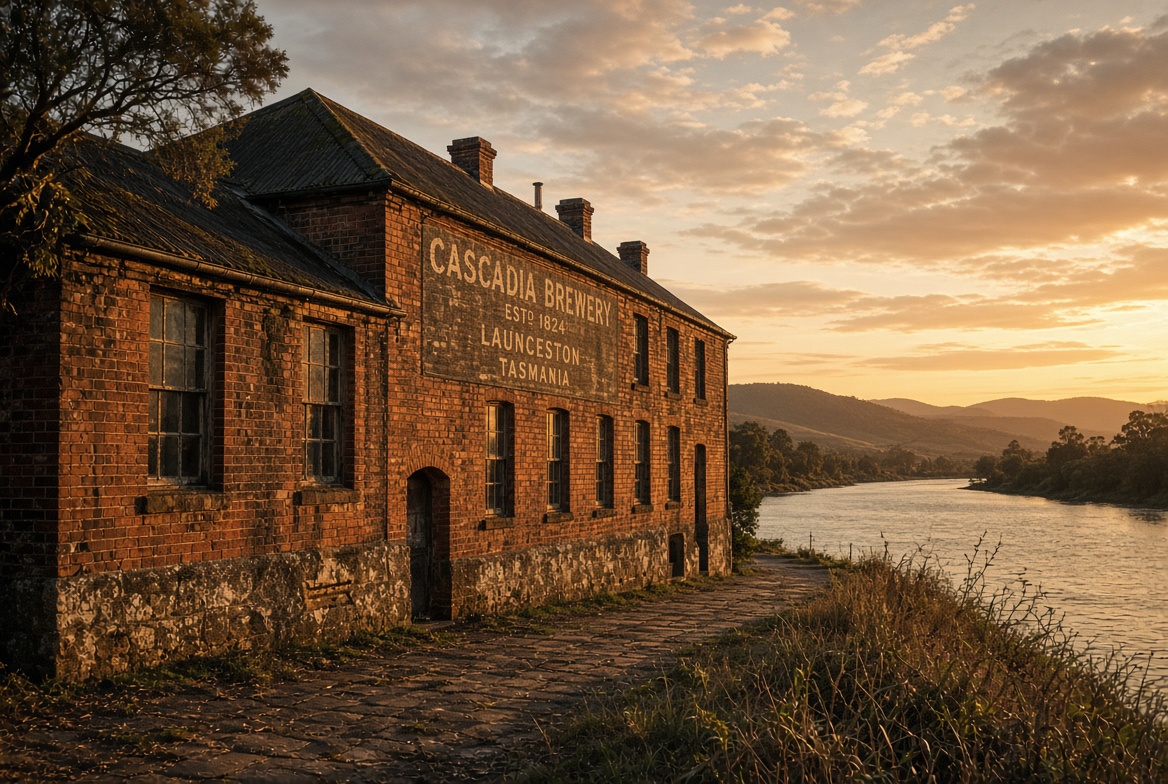
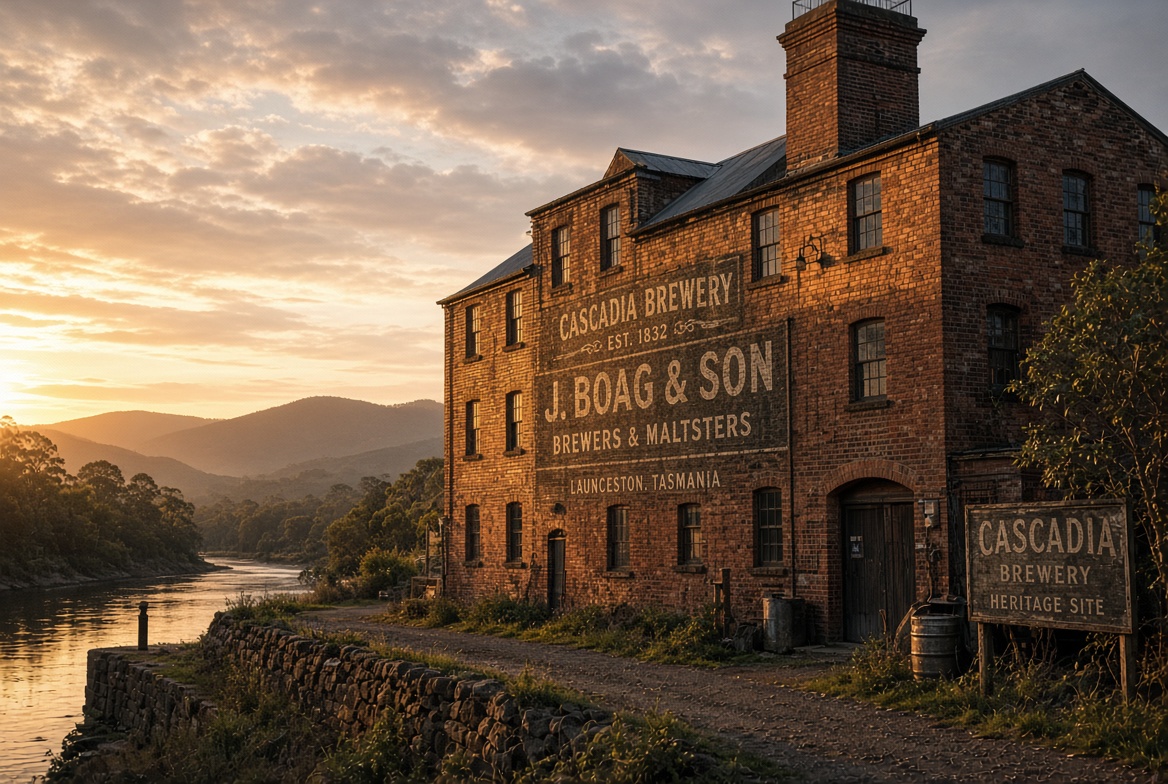
The sharpest recent emblem is James Boag’s Brewery in Launceston. Founded in 1881 as the Esk Brewery on the banks of the North Esk, it became one of Tasmania’s best-known brands and a fixture of northern Tasmanian life for 145 years. On 21 October the last Tasmanian-brewed Boag’s rolled off the packaging line. Forty-two full-time jobs go with the closure. The brand itself will continue, brewed on the mainland. Tasmania will now import its own icon. The visitor centre and museum stay open; the working brewery does not.
Boag’s sits inside a much larger pattern. Independent Brewers Association chief executive Sabrina Kunz has stated that around 80 independent and small Australian craft breweries have entered voluntary administration or shut down since 2023.
Black Hops on the Gold Coast collapsed twice in two years before being acquired by Tribe Breweries. King River Brewing in Victoria’s High Country has gone into liquidation. Newstead Brewing Co, Deeds Brewing, Sydney Beer Co, Big Shed, Hawkers, Wayward and others have faced administration, restructuring or retreat. Some emerge thinner; many simply disappear. Each one represented local capital, local skill, local employment, and often a venue that gave a town or suburb its own flavour and a reason for people to gather.
Those breweries represented local productivity, local aspiration, local character.
Documented cases (approximate chronological order where dates are clear)
- Ballistic Beer Co (Brisbane, QLD) — VA early 2023 (debts >$5m, including >$2m to ATO). Exited under new ownership (Catchment-led consortium).
- Tribe Breweries (Goulburn, NSW; Stockade, Mornington Peninsula, Wilde) — VA 2023. Rescued; later involved in further industry consolidation.
- Parched Brewery (Brisbane, QLD) — VA 2023. Short-lived; venue later reopened under different operators.
- Wicked Elf (formerly The Little Brewing Co) — Ceased trading mid-2023.
- Running With Thieves (Fremantle/South Freo, WA) — VA 2023. Later exited under new ownership group.
- Easy Times (Brisbane area) — Earlier VA (pre-2023 cluster).
- Wayward Brewing / Local Drinks Collective (Sydney, NSW) — VA January 2024 (significant ATO/excise debt ~$1.27m+). Exited via DOCA (creditors ~10c in the dollar).
- Hawkers Beer (Reservoir, Melbourne, VIC) — VA early 2024. Cited restricted market access, costs, and legacy tax debt from COVID deferrals. Later restructured.
- Big Shed Brewing (Adelaide, SA) — VA early 2024 (pandemic expansion + debt). Exited via DOCA; later liquidated December 2025 after lease loss (owed >$1.6m, substantial ATO component).
- Deeds Brewing (Glen Iris, VIC) — VA then ceased operating / liquidated 2024. Founders cited inability to secure ATO payment plan on deferred liabilities plus rising costs.
- Akasha Brewing (Sydney, NSW) — VA 2024. Part of the early-2024 cluster.
- Golden West (WA) — VA ~2024. Award-winning; cited tax and cost pressures.
- Black Hops (Gold Coast, QLD) — VA twice (2024 and July 2026). Later acquired by Tribe Breweries.
- Valhalla Brewing / Lotus Beer Co (Geelong, VIC) — VA then liquidated 2024.
- Burnley Brewing (Melbourne, VIC) — Liquidation 2024.
- Newstead Brewing Co (Brisbane, QLD) — Ceased operations permanently March 2025 (floods + industry headwinds cited).
- Sydney Beer Co — Entered administration ~March 2025.
- Currumbin Valley Brewing (Gold Coast, QLD) — Permanent closure 2025 (unable to find buyer).
- King River Brewing (Victorian High Country) — Liquidation September 2026.
- James Boag’s Brewery (Launceston, TAS; Lion/Kirin-owned) — Production ceases 6 November 2026 after 145 years (42 jobs; under-capacity + costs). Brand continues on mainland.
- Sobah Beverages (Gold Coast, QLD; non-alc) — VA September 2025.
- Six String Brewing (Central Coast, NSW) — VA mid-2026.
- Kaiju! — VA early 2025 (trading profitably at the time but accumulated debt).
- Paddles Brewing Co (Newcastle/Lake Macquarie, NSW) — Closure 2025 (costs + sales downturn).
- Molly Rose Brewing (Melbourne) — Liquidators called ~2025.
- Black Brewery Co and related (Margaret River, WA) — Permanent shutdowns 2024.
- Apollo Bay Brewery, Prancing Pony — Restructuring/VA processes 2024.
- Mighty Craft (ASX-listed investor/accelerator holding stakes in multiple brands) — VA 2024; subsequent asset sales.
This is the quiet decimation of local productivity.
When such businesses fold under indexed excise and market lock-out, the loss is measured in closed venues, redundant tradespeople, and towns that lose another reason for visitors and residents to linger. The major brands will still pour; the distinctive local ones will not. Independent breweries, many of them regional, contribute billions in economic activity and a disproportionate share of sector employment relative to their volume. Their attrition is not costless.
The market consequence is concentration. Carlton & United Breweries (owned by Japan’s Asahi) and Lion (Kirin) together account for the large majority of Australian beer, figures in the 80–85 per cent range are commonly cited. The same Japanese groups also own many of the brands that once signalled craft independence.
Policy settings are driving the duopoly. Retail is similarly concentrated between the major chains, Coles and Woolworths, further limiting shelf and tap access for smaller producers.
In other words, Australians don’t even own their own breweries anymore. Their ales are brewed by Japanese owned corporate conglomerates.
The independent sector that once produced some of the world’s best craft beer is being reduced, brewery by brewery, to an afterthought.
A recurring factor in many cases was COVID-era relief: the Australian Tax Office allowed deferral of excise and other tax payments during the pandemic. Post-COVID, with rising costs, weaker discretionary spending, and inflation-indexed excise, many operators struggled to clear the deferred liabilities. Several founders and the IBA have described the ATO as unwilling to accept longer payment plans, pushing businesses into administration. Or less politely, a ruthless and greedy tax office propelled many businesses into bankruptcy, while their own officers luxuriate on increased public service wages.
A craft brewery is not an abstract line in the national accounts. It is a father-and-son operation on the south coast that built a following from Newcastle to Canberra, employs locals, sponsors clubs and gives a region a product and a place to stop—precisely the kind of small enterprise examined in these pages earlier this year. When such businesses fold under indexed excise and market lock-out, the loss is measured in closed venues, redundant tradespeople, and towns that lose another reason for visitors and residents to linger.
The major brands will still pour; the distinctive local ones will not. Independent breweries, many of them regional, contribute billions in economic activity and a disproportionate share of sector employment relative to their volume. Their attrition is not costless.
An increasingly desperate Prime Minister, micro-managed by his incompetent media officers and plummeting in the polls, will continue to be photographed with a beer in hand.
Compare that with Bob Hawke. One of Labor’s most successful prime ministers, Hawke famously claimed a speed-drinking record as a student at Oxford in 1954, allegedly sculling 2.5 pints in 11 seconds. The feat cemented his reputation as a larrikan, won the hearts of Australia’s working class, and was often cited as one of the reasons he became prime minister from 1983 to 1991. A heavy drinker, he impressed everyone by swearing he would give up the grog if elected. He kept his word.
No such luck with Albanese. The beer-in-hand photographs and his odd speech patterns are cementing his reputation for incompetence. In his attempts to appear relatable he has become a parody of himself. The ordinary bloke with a beer has turned into the most personally disliked prime minister in Australian history. With their bullshit detectors firmly in place, the public have made Albanese the man in the pub everyone likes to hate: a grifter and a public nuisance who should never have been let through the door.
Further Reading:
WHO OWNS YOUR BEER
https://craftypint.com/who-owns-your-beer
A GRIM WARNING FOR EVERY AUSSIE DRINKER