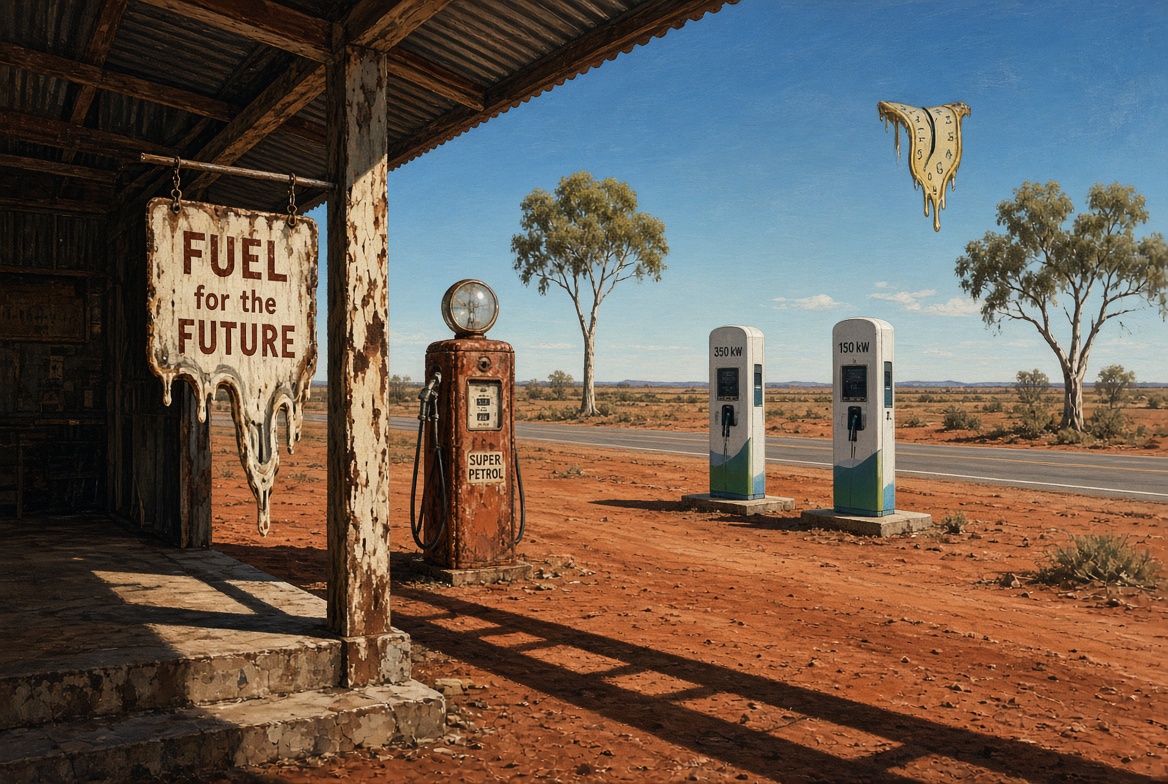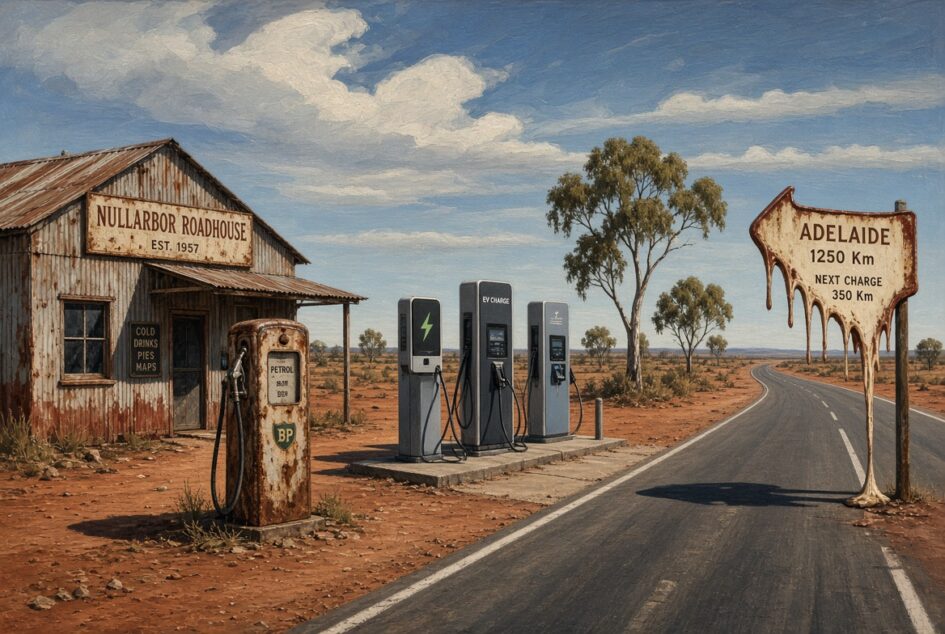
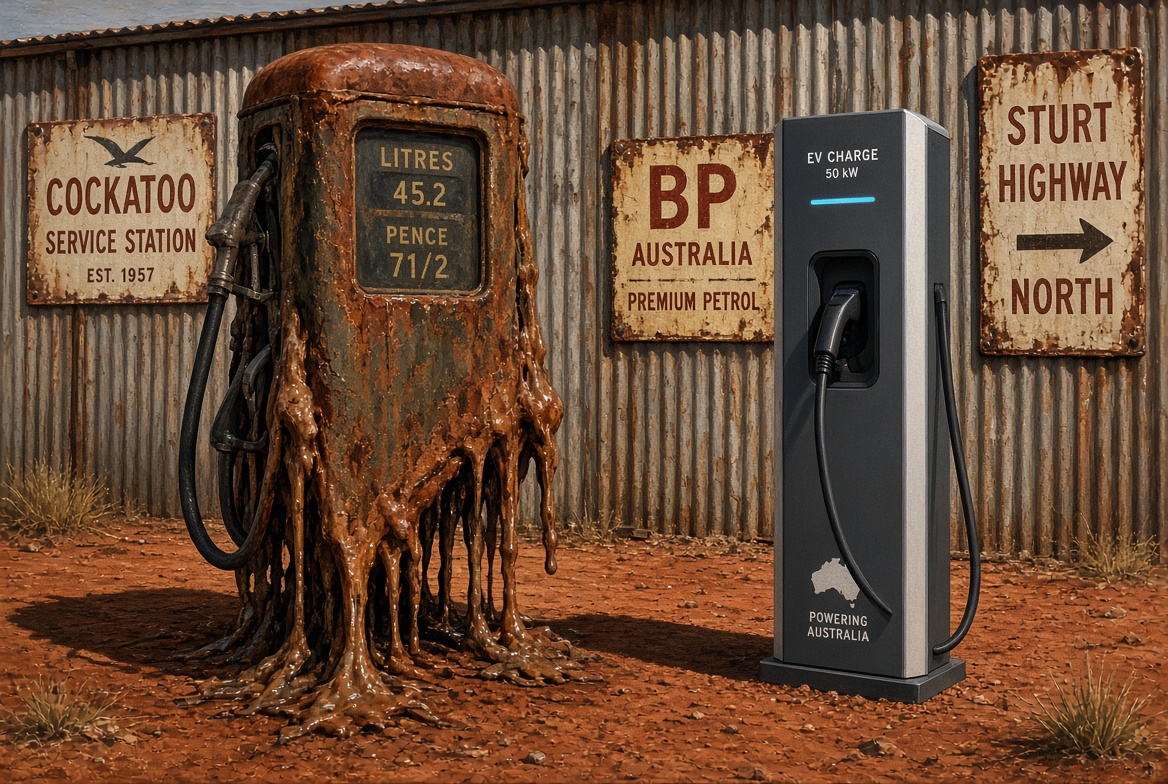
Australia’s unfortunate EV drivers are reporting headaches with EV chargers across outback and far west New South Wales.
Recent accounts mention the NRMA units in places like Wilcannia, Bourke, Walgett, and Cobar regularly failing or running at reduced speeds. Plus the Broken Hill council charger that keeps overheating and shutting down.
Older Tritium hardware is a common culprit. Some have sat offline for months because spare parts are hard to get.
Coverage is still thin out there, and when a station does go down, there’s often no quick backup. Apps can also show a charger as online when it won’t actually talk to your car.
The same core problems exist in South Australia, just scaled down.
The big national headaches — aging first-generation Tritium chargers that fail often, slow repairs because of parts shortages, failed handshakes between car and charger, and queues on peak holiday weekends — are showing up across the country.
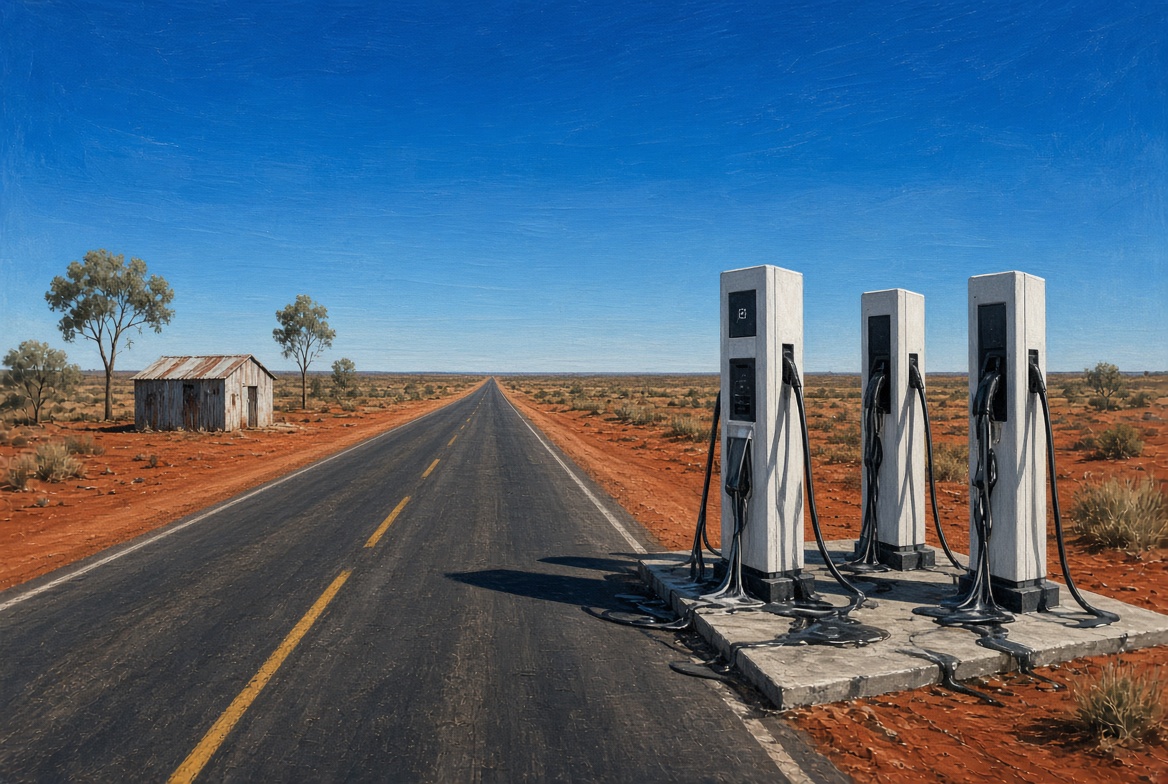
In South Australia ChargeFox and the RAA network have reported the same reliability complaints, especially on remote stretches like the Nullarbor and Eyre Highway, where off-grid sites can drop to low power or go dark.
The difference is intensity. New South Wales has far more fast chargers and a much bigger EV fleet, so the congestion and coverage gaps hit harder on busy corridors like the Hume.
South Australia finished its first full statewide network more recently and has a higher rate of chargers per EV, which softens the pain, but the underlying hardware and maintenance issues are shared across the country.
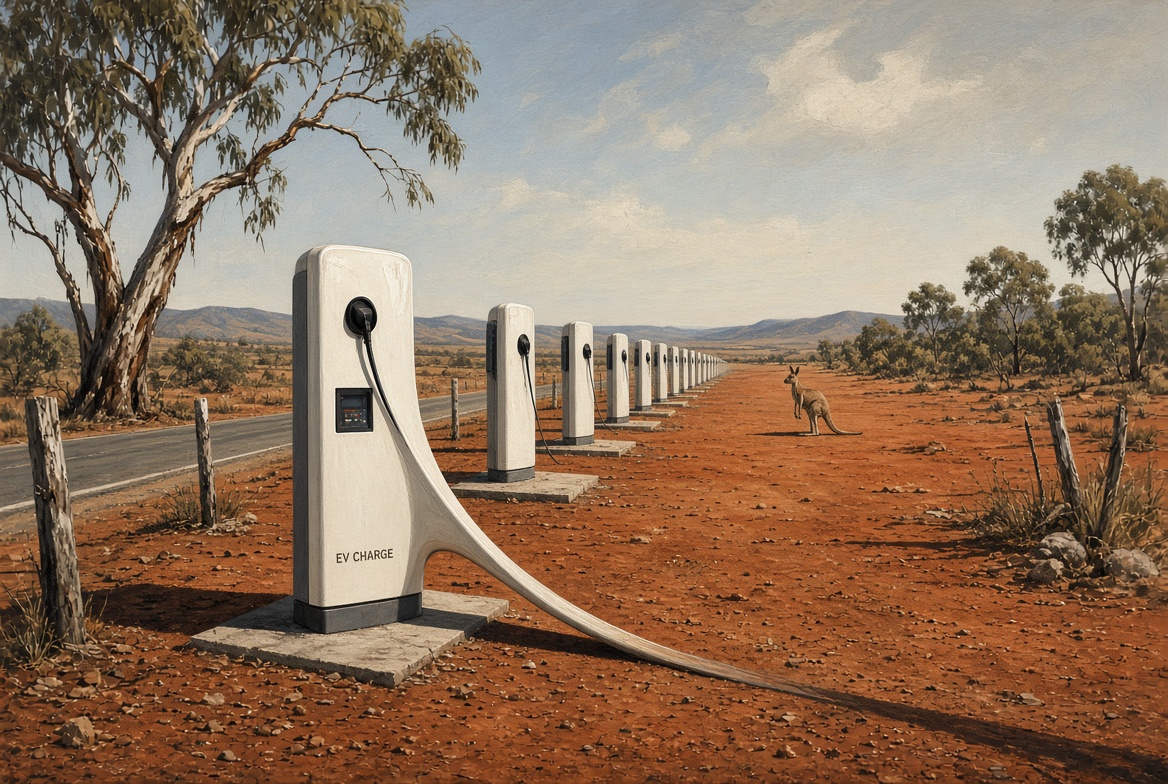
The same core problems show up in Western Australia, and in some ways they’re sharper. The WA EV network, run by Synergy and Horizon Power on the ChargeFox platform, has the familiar mix of aging Tritium-style hardware, failed handshakes, communication dropouts, and slow repairs.
Remote sites on the Eyre Highway and Nullarbor are especially prone to going dark for weeks, sometimes because of vandalism, parts shortages, or the chargers tripping the roadhouse generators they rely on. Drivers have been left stranded, and the Tesla Owners Club regularly fields calls about it. The difference is scale and isolation.
WA’s network is one of the longest in the world, but the distances between sites are bigger and the backup AC chargers are painfully slow. A twenty-minute fast charge can turn into five hours.
The Australian media, largely controlled by the government, have mostly ignored the issue. But there have been some mainstream reports. In March this year, the ABC ran a piece titled “Electric Highways: Causing Range Anxiety for EV Drivers Across the Nullarbor,” quoting drivers and a Tesla Owners Club calling the network “not fit for purpose” because of repeated malfunctions and slow repairs.
A January 2025 story covered broken chargers along the same route, and ABC Radio Perth had the club chair saying he regularly fields calls from stranded regional drivers. The West Australian has touched on it too, including a story about a Pemberton charger that failed and cost fifty-one thousand dollars to replace.
Under Australia’s new Vehicle Efficiency Standard, which started in 2025, manufacturers earn tradable credits based on how many low-emission vehicles they bring into the country.
Not how many they actually sell. BYD has been the biggest winner, racking up over six point two million credits in the first six months of reporting, while other Chinese brands like Chery, Geely, and GWM also banked large surpluses.
They’ve imported tens of thousands more cars than they’ve sold, stockpiling them in places like theme parks, and those credits can be sold to other markets facing penalties or banked for later. Critics call it a loophole that effectively rewards over-importing. The government says the point-of-sale version was too complex to set up at launch.
This aspect of the disaster has been widely reported in the Australian Financial Review, news dot com au, and elsewhere.
The main direct cost to taxpayers has been the Electric Car Discount — the Fringe Benefits Tax exemption for EVs. It cost about $2 billion in the first three years to 2024-25, and is running at roughly $1.35 billion per year now in 2025-26. It’s projected to keep rising toward $2.8 billion annually by 2028-29.
On top of that, the government has spent several hundred million on EV charging infrastructure through programs like the $500 million Driving the Nation Fund, including specific allocations for highway chargers, kerbside charging, and dealership support.